Tanzania: History, People & Culture
Understand the country beyond its safari landscapes: Tanganyika, Zanzibar, independence, culture and the conversations shaping Tanzania today.
A country with many histories
Tanzania’s story includes mainland communities and the islands of Zanzibar. It is not a single uninterrupted kingdom or a culture shared identically by everyone. Visitors gain more by listening to local perspectives and connecting museum visits, everyday conversations and historic places.
Before the Berlin Conference
Long before modern borders, the region contained farming communities, pastoral societies, trading towns and political authorities with different languages and traditions. Swahili coastal towns grew from African foundations and Indian Ocean connections. Zanzibar’s history includes Omani rule, commerce and slavery; these relationships must not be reduced to a romantic story of trade.
1884–1885: partition and colonial expansion
The Berlin Conference formed part of the European partition of Africa. German colonial expansion subsequently brought much of the mainland into German East Africa, while Zanzibar became a British protectorate. The conference was a framework for imperial claims, not a meeting that instantly drew every modern Tanzanian boundary.
1905–1907: the Maji Maji War
Resistance to German colonial rule spread across southern areas in the Maji Maji uprising. Coercive labour and cotton policies contributed to grievances. Colonial repression and the destruction of livelihoods produced catastrophic suffering, including famine. Remembering Maji Maji means recognising the people and communities affected, not treating the conflict as a sightseeing curiosity.
Tanganyika under British administration
After the First World War, Tanganyika came under British administration through the mandate system and later United Nations trusteeship. Growing political organisation and demands for self-government led towards independence. Tanganyika was the mainland territory; Zanzibar followed a separate political path.
1961–1964: independence, revolution and union
Tanganyika became independent on 9 December 1961 and a republic in 1962. Zanzibar gained independence on 10 December 1963; the revolution followed on 12 January 1964. Tanganyika and Zanzibar united on 26 April 1964. The United Republic of Tanganyika and Zanzibar adopted the name United Republic of Tanzania on 29 October 1964. This naming anniversary is separate from the events of October 2025.
Nyerere and African liberation
Julius Nyerere helped lead the independence movement and became central to the new nation’s identity. His government supported African liberation movements, and Dar es Salaam became an important meeting place for activists from the continent. His legacy includes national unity, education and the promotion of Kiswahili, alongside debate about one-party rule, economic policy and compulsory villagisation. Understanding that legacy requires both achievements and criticism.
Presidents and public life
The Union presidency has passed through Julius Nyerere, Ali Hassan Mwinyi, Benjamin Mkapa, Jakaya Kikwete, John Magufuli and Samia Suluhu Hassan. Zanzibar also has its own presidency within the Union; Abeid Amani Karume was central to its revolutionary and union history. There is no objective “best president” ranking: people weigh unity, livelihoods, freedoms, public services and leadership differently.
Communities and languages
Tanzania includes many ethnic communities. Sukuma, Nyamwezi, Chagga and Haya are among its large communities; Maasai, Makonde, Hehe, Gogo, Yao, Iraqw, Hadza and many others contribute to its diversity. Kiswahili is the national language and a shared means of communication. English is also used, including in tourism and education. A community’s identity should not be reduced to a costume or a visitor performance.
Population: distinguish counts from estimates
Tanzania’s population has grown substantially since independence. Historical estimates put the population of the territory represented as Tanzania today at roughly 10 million around 1960. The 2022 national census counted 61,741,120 people. For later years, consult the National Bureau of Statistics projections linked below: a projection is an estimate, not a fresh census count.
Music across generations
Explore Tanzania through a listening journey rather than a ranking. Siti binti Saad and Bi Kidude are closely associated with taarab; Mbaraka Mwinshehe and Remmy Ongala are important names in dance-band music. Hukwe Zawose and Saida Karoli offer other distinctive musical traditions. For later popular music, explore Lady Jaydee, Ali Kiba, Diamond Platnumz, Nandy and Zuchu. These eleven artists are a starting point, not a complete history or a claim about who is currently the most popular.
Film and television
Steven Kanumba remains a widely remembered figure in Tanzanian popular film. Other familiar screen names include Elizabeth Michael, Wema Sepetu, Vincent Kigosi and Jacqueline Wolper. Bongo movies and television have brought performers and filmmakers into everyday public conversation. Ask your guide about locally enjoyed productions and, where available, subtitled work. A celebrity photograph or name on this page does not imply endorsement of Tartaruga Safaris.
Football and sporting conversation
Football is a lively part of daily conversation. Simba and Young Africans, often called Yanga, have major followings; Azam is another prominent club. The men’s national side is known as Taifa Stars. Mbwana Samatta and Simon Msuva are notable international players, while Haji Mnoga and Tarryn Allarakhia also featured in the national squad reported in December 2025. These are examples, not an all-time ranking or a current squad list.
Food to discover
Popular foods include ugali with vegetables or a sauce, rice and beans, grilled meat, mishkaki skewers, pilau and fish. Coastal cooking often features spices and coconut, while preferences vary across regions and households. Ask about ingredients and preparation if you have dietary requirements. A market visit or hosted meal is a chance to learn; no single dish represents every Tanzanian.
29 October 2025 and its aftermath
The general election of 29 October 2025 was followed by protests and a security response involving deaths and injuries. African Union observers criticised the election’s compliance with democratic standards. Reports and official positions have differed, including over the scale of casualties; this page does not present an unverified death toll. These events deserve accurate, respectful treatment rather than being minimised for tourism marketing.
Tundu Lissu and contemporary politics
Tundu Lissu is a prominent opposition politician and lawyer who became CHADEMA chairman in January 2025. His role is important to understanding debate about political rights and electoral reform. Calling any politician the country’s “biggest” leader is an opinion rather than a measurable fact. Legal proceedings and political developments need dated reporting; older articles should not be used to claim his present custody status.
What this means for visitors
Tanzania continues to welcome visitors, but no operator can guarantee that every place is safe at every time. The UK travel advice reviewed for this page warns that further demonstrations and disruption are possible. Avoid protests and political gatherings, follow current official advice and check your route and insurance before travel. Our team can help adjust practical arrangements when conditions change. Review date: 19 September 2026.
Experience history respectfully
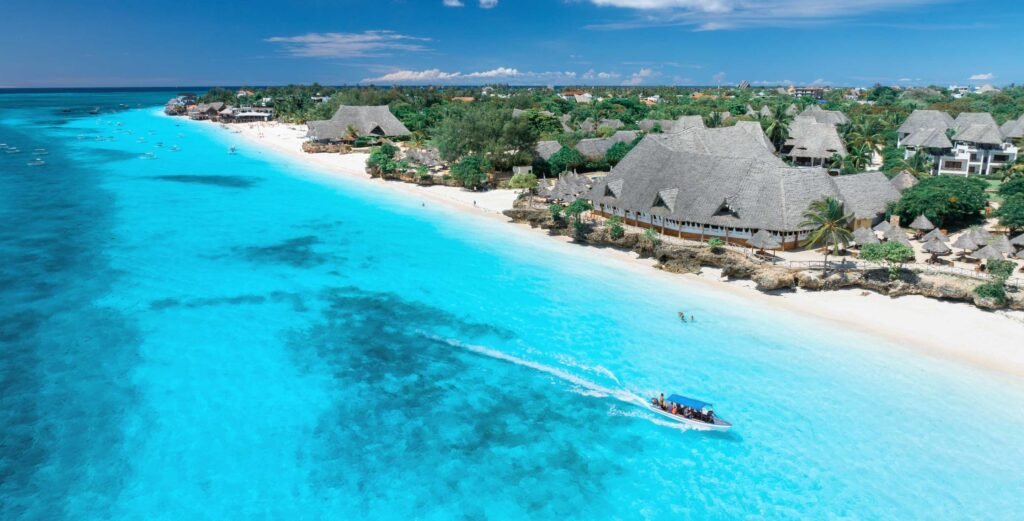
Consider a guided Stone Town walk, a museum visit or conversations with local hosts alongside your wildlife itinerary. Stone Town’s architecture reflects African, Arab, Indian and European influences. Historic places also contain painful stories about enslavement and inequality. Ask questions, respect religious spaces and obtain permission before photographing people.