Tartaruga Safaris · Slow Down. See More.
Tanzania wildlife rewards curiosity. Begin with the Big Five, then make room for the animals that make each habitat distinctive—from tiny antelopes to chimpanzees and Indian Ocean marine life. This guide highlights species and animal groups travellers often ask about; it is not an inventory of every species in Tanzania.
How to read our sighting guide
The encounter labels below are qualitative planning advice, not measured success rates. They refer to suitable habitat on an appropriate itinerary—not every game drive or every season. Rain, vegetation, migration, guide decisions and time in the park affect what you see. We will not turn a guess into a “90% chance” claim.
Tell our team which animals matter most. We can choose relevant locations and allow time, but we cannot guarantee an animal, a kill, a birth or a river crossing.
Start with the Big Five
| Animal | Places to consider | Encounter expectation | One thing to notice |
|---|---|---|---|
| Lion | Serengeti, Ngorongoro Crater, Ruaha, Nyerere | Often seen on a well-planned multi-day route | Lions are social cats; watching interactions within a pride can be as rewarding as seeing a hunt. |
| Leopard | Serengeti riverine woodland, Ruaha, Tarangire | Less predictable | A leopard can carry prey into a tree, helping protect it from other predators. |
| African savanna elephant | Tarangire, Ruaha, Nyerere, Serengeti | Commonly encountered in suitable habitat | The trunk functions as a breathing tube, scent detector and exceptionally versatile gripping tool. |
| African buffalo | Ngorongoro Crater, Serengeti, Katavi, Arusha National Park | Commonly encountered in suitable habitat | Mature males can develop a heavy horn base called a boss. |
| Black rhinoceros | Ngorongoro Crater; selected Serengeti areas; separately reserved Mkomazi rhino experience | Rare or specialist viewing | Its pointed upper lip helps it browse leaves and twigs. |
Beyond the Big Five
| Animal | Places to consider | Encounter expectation | One fun fact |
|---|---|---|---|
| Plains zebra | Serengeti, Ngorongoro Crater, Tarangire, Mikumi | Commonly encountered | Each zebra has a distinctive stripe pattern. |
| Blue wildebeest | Serengeti–Ngorongoro ecosystem; other savannah parks | Common in the right area; migration location seasonal | Newborn calves can stand and move soon after birth. |
| Masai giraffe | Serengeti, Tarangire, Arusha, Mikumi, Ruaha | Commonly encountered in suitable habitat | Like most mammals, giraffes have seven neck vertebrae; theirs are exceptionally elongated. |
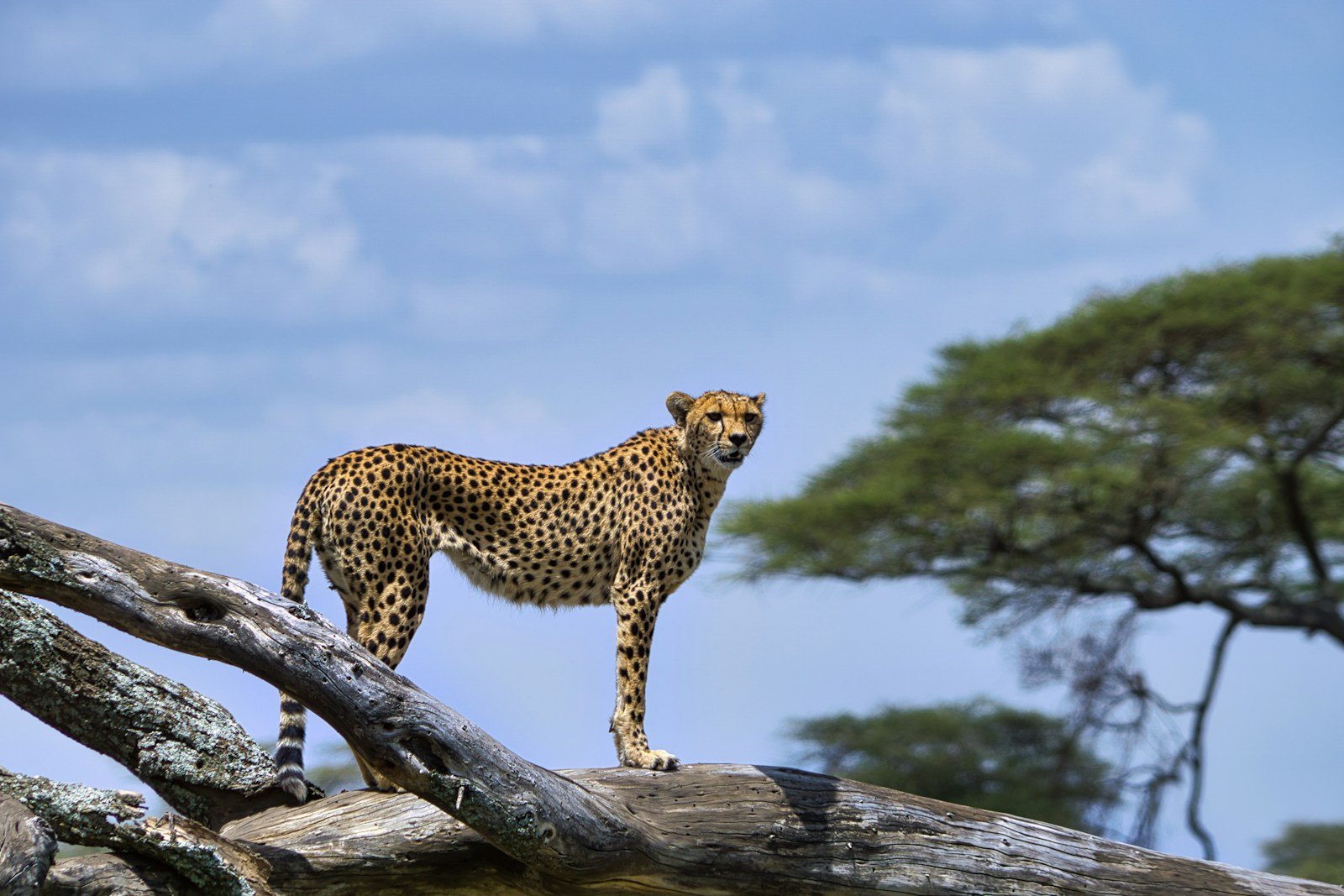
| Cheetah | Serengeti open plains and Ndutu area | Less predictable | The dark facial tear marks distinguish a cheetah from the more heavily built leopard. |
| Spotted hyena | Serengeti, Ngorongoro Crater, Ruaha | Often encountered; timing matters | Spotted hyenas are capable hunters as well as scavengers. |
| African wild dog | Nyerere and Ruaha landscapes | Unpredictable; plan dedicated wildlife time | Pack members cooperate in hunting and caring for young. |
| Hippopotamus | Serengeti pools, Katavi, Nyerere rivers and lakes | Common at suitable pools; keep a safe distance | Hippos usually leave the water to graze after dark. |
| Nile crocodile | Mara and Grumeti rivers, Nyerere waterways, Katavi | Often visible in suitable river habitat | Eyes and nostrils sit high on the head, allowing much of the body to remain submerged. |
| Warthog | Serengeti, Ngorongoro Crater, Tarangire, Manyara | Commonly encountered | Warthogs often kneel on their front legs while grazing. |
| Impala | Tarangire, Serengeti woodlands, Manyara, Ruaha | Commonly encountered | An impala can switch between grazing grass and browsing leaves. |
| Thomson’s gazelle | Serengeti and Ngorongoro short-grass plains | Common in suitable grassland | Look for the dark stripe along its side. |
| Grant’s gazelle | Serengeti, Ngorongoro and Tarangire | Often encountered in suitable habitat | Its white rump patch extends above the tail; compare this with a Thomson’s gazelle. |
| Topi | Serengeti grasslands | Often encountered locally | Topi sometimes stand on raised ground to survey their surroundings. |
| Hartebeest | Serengeti and other savannah habitats | Often encountered locally | A long narrow face and sloping back help distinguish it from other antelopes. |
| Common eland | Serengeti, Ngorongoro highlands, Ruaha | Less predictable | Despite their size, eland are agile jumpers. |
| Waterbuck | Tarangire, Manyara, Nyerere, Ruaha | Often encountered near suitable water and cover | The shaggy coat and, in common waterbuck, pale rump ring are useful identification clues. |
| Greater kudu | Ruaha woodland | Less predictable | Adult males have striking spiral horns. |
| Lesser kudu | Tarangire and northern dry bush habitats | Elusive | Its vertical body stripes help break up its outline in scrub. |
| Dik-dik | Tarangire, Serengeti woodland and dry bush | Often overlooked rather than absent | These tiny antelopes often live in territorial pairs. |
| Klipspringer | Rocky kopjes in Serengeti and rocky Ruaha habitats | Localised | Small, specialised hooves help it move across rock surfaces. |
| Serval | Ngorongoro grassland and Serengeti | Elusive | Large ears help this small cat locate prey in vegetation. |
| Caracal | Dry savannah and woodland, including Ruaha | Rare sighting | Long black ear tufts are its most recognisable feature. |
| Black-backed jackal | Serengeti and Ngorongoro open country | Often encountered locally | Its dark saddle contrasts with the reddish sides of the body. |
| Banded mongoose | Savannah parks including Tarangire and Serengeti | Often encountered locally | These social mongooses forage together in groups. |
| Honey badger | Serengeti and Ruaha landscapes | Rare sighting | It is an adaptable forager, despite its name suggesting a diet only of honey. |
| Aardvark | Savannah and woodland habitats | Very rare; mainly nocturnal | Its powerful claws help excavate ants and termites. |
| Pangolin | Suitable wooded habitats; occasional chance encounters | Exceptionally rare; never promised | Its protective scales are made of keratin, the same material as human nails. |
Forest primates: include Gombe and Mahale
Chimpanzee journeys are different from vehicle safaris. They involve guided forest trekking and should have their own travel days. Follow the park guide’s instructions on distance, health, group size and time with the animals. Do not visit primates when unwell, and never feed or touch them.
| Animal | Places to consider | Encounter expectation | One fun fact |
|---|---|---|---|
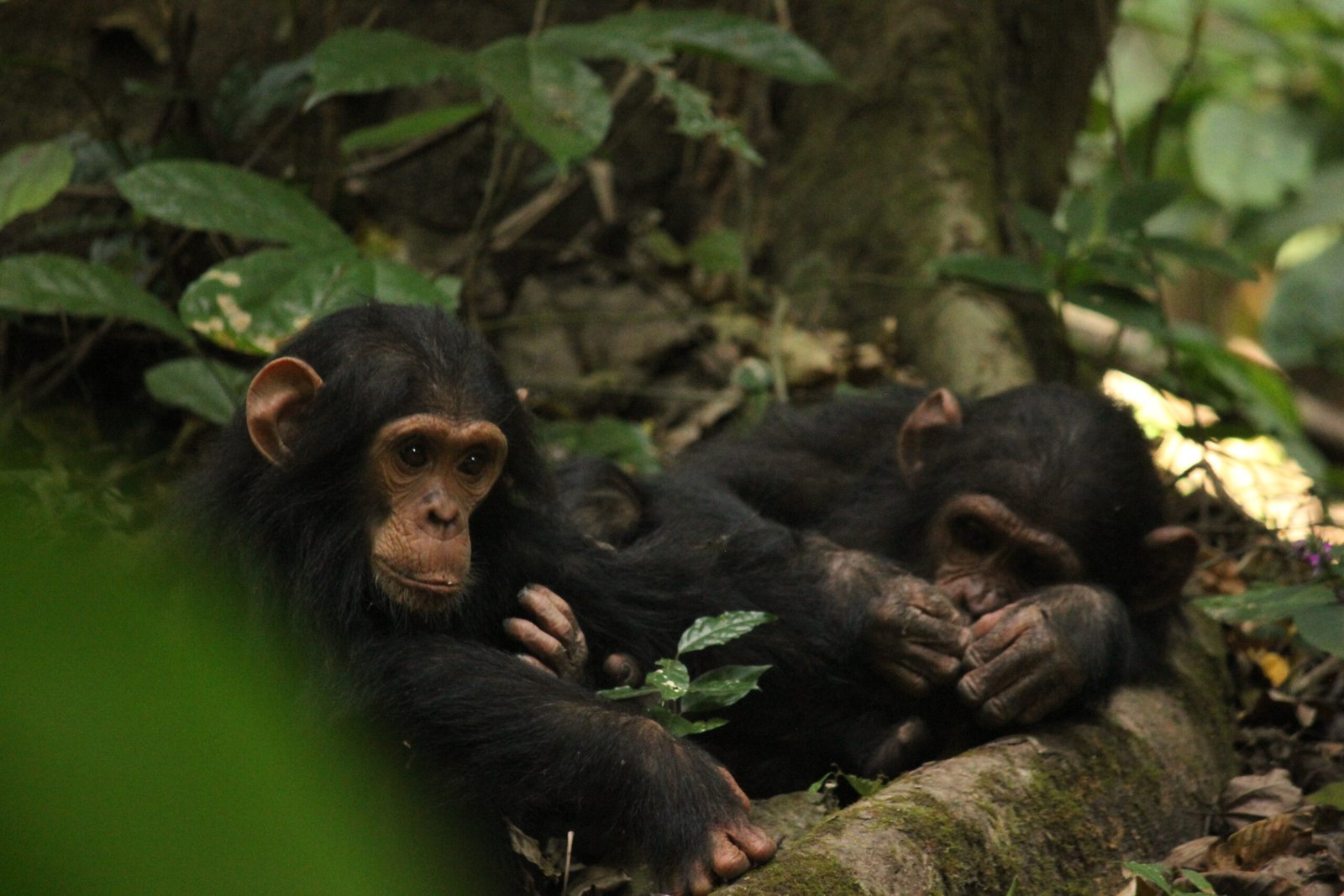
| Chimpanzee | Gombe and Mahale Mountains | Dedicated guided trek; sightings not guaranteed | Chimpanzees use tools, including sticks to obtain food. |
| Olive baboon | Manyara, Arusha, Gombe and northern safari areas | Commonly encountered in suitable habitat | Baboons live in social troops with complex relationships. |
| Vervet monkey | Woodland and river edges in several northern parks | Commonly encountered in suitable habitat | Watch the troop’s communication and grooming rather than offering food. |
| Black-and-white colobus | Arusha National Park and suitable montane forest | Targeted forest visit | Colobus monkeys have a specialised digestive system suited to a leaf-rich diet. |
| Zanzibar red colobus | Jozani and other suitable Zanzibar forest habitats | Targeted guided forest visit | This distinctive primate is native to Zanzibar; it is not a Serengeti animal. |
Birdlife and the Indian Ocean
| Animal | Places to consider | Encounter expectation | One fun fact |
|---|---|---|---|
| Ostrich | Serengeti, Ngorongoro and Tarangire open country | Often encountered | The ostrich is the largest living bird. |
| Lesser flamingo | Lake Natron; other Rift Valley lakes when conditions suit | Seasonal and water-condition dependent | Pigments in its food contribute to its pink colour. |
| Secretarybird | Serengeti and other open grassland | Less predictable | It spends much of its hunting time walking on long legs. |
| African fish eagle | Lakes and rivers, including Nyerere and western lake shores | Often encountered at suitable water | Its distinctive call is part of the soundscape of many African waterways. |
| Grey crowned crane | Ngorongoro Crater and suitable wetlands | Localised | The golden crown consists of stiff feathers. |
| Lilac-breasted roller | Savannah woodland in northern and southern Tanzania | Often encountered locally | Its blue wings are particularly striking in flight. |
| Vultures | Serengeti, Ngorongoro and Ruaha | Variable; several species occur | Vultures help remove carcasses and recycle nutrients. |
| Whale shark | Mafia Island waters | Seasonal specialist boat excursion | The whale shark is a filter-feeding fish, not a whale. |
| Sea turtles | Mafia and Zanzibar marine habitats | Variable; guided snorkelling or diving conditions apply | Turtles breathe air and must return to the surface. |
| Dolphins | Zanzibar and Mafia coastal waters | Variable; choose responsible boat operators | Dolphins are mammals and breathe through a blowhole; they must not be chased or surrounded. |
Wildlife numbers: use a dated census
TAWIRI’s wet-season 2023 aerial survey estimated 1,366,109 wildebeest, with a standard error of 231,741, in the Greater Serengeti Ecosystem. The survey took place at the end of March. This is an ecosystem estimate from a specific survey—not a current headcount inside Serengeti National Park and not a sighting probability.
The report itself discusses uncertainty and opportunities to improve accuracy. Read the TAWIRI 2023 report, executive summary.
We have not verified comparable recent counts for every species in every park, including Gombe. Rather than mix old counts, continent-wide estimates and local populations, this guide leaves those numbers unspecified. We add a population figure only when its species, survey year, area and source are clear.
Endangered does not mean extinct
An extinct species has no surviving individuals. An endangered species still exists but faces a high risk of extinction; a species may also disappear locally while surviving elsewhere. A common sighting in one well-protected area does not prove that a species is secure across its entire range.
WWF identifies black rhino as Critically Endangered, and African wild dog and chimpanzee as Endangered. These are global conservation classifications, not a prediction of what you will see on a particular trip. Other animals face habitat loss, conflict, poaching and related pressures too. We do not label unverified species “safe” simply because they are absent from this short list.
A countrywide route guide
| Area | Parks or destinations | How to plan |
|---|---|---|
| Northern savannahs | Serengeti, Tarangire, Lake Manyara, Arusha and Mkomazi | Choose habitats and time for your target animals; rhino experiences require specific planning. |
| Northern mountains | Kilimanjaro | Primarily a trekking destination; forest wildlife is an additional possibility, not a Big Five safari. |
| Southern circuit | Ruaha, Nyerere and Mikumi | Build a dedicated wildlife route; compare drive and flight logistics. |
| Eastern coast | Saadani | Combine coastal scenery with a park visit; do not assume ocean and land wildlife occur together on demand. |
| Western forests and floodplains | Gombe, Mahale Mountains and Katavi | Chimpanzee trekking or seasonal floodplain wildlife merits dedicated travel time. |
| Lake Victoria islands | Rubondo Island and Saanane Island | Island environments require a different itinerary from open-plains game drives. |
| Southern highlands | Udzungwa Mountains and Kitulo | Forest, hiking, birds and botanical interests; not substitutes for a savannah big-cat safari. |
| Less-visited western and northwestern parks | Burigi-Chato, Ibanda-Kyerwa, Rumanyika-Karagwe, Kigosi and Ugalla River | Enquire for a site-specific plan. Confirm current visitor access, activities, guides and accommodation before booking. |
| Beyond TANAPA national parks | Ngorongoro Conservation Area, Lake Natron, Lake Eyasi and Zanzibar marine/forest sites | Different authorities and activity arrangements apply; the same park ticket does not cover them all. |
Questions travellers ask
Can we see the Big Five in one day?
It is possible to have a remarkable day, but we never promise all five in a day or over an entire safari. Give important wildlife areas several nights where your schedule allows.
Are chimpanzees in the Serengeti?
Gombe and Mahale are the principal Tanzania destinations we discuss for chimpanzee trekking. Build them into a separate western Tanzania extension.
Do you publish sightings percentages?
Only if supported by a defined dataset covering the same species, place, season and trip duration. We currently use clearly labelled qualitative expectations.
Why are all park population totals not listed?
Censuses use different methods, years and boundaries. An honest gap is more useful than a misleading comparison.
Can the guide approach animals for a better photograph?
Your guide follows park rules and animal behaviour. We do not chase wildlife, block movement or promise off-road access.
Slow Down. See More.
Tell us your dates, interests and preferred comfort level. Our team will help you shape a Tanzania journey around what matters to you.
Plan my Tanzania journey WhatsApp our team
info@tartarugasafaris.com · +255 667 767 553